Product UX · Tablet ordering
Rose Family Bakery POS
I designed a bakery point-of-sale concept around a detailed task: helping staff take a custom order without losing track of the choices already made.
Design focus Break a complex order into manageable steps while keeping its details and total visible.
PROJECT CONTEXT
The task and my approach
A custom bakery order involves more than choosing a product. Staff need to capture the cake options, a message, the order timing, and payment details. I explored that process in low- and mid-fidelity tablet wireframes, using a staged flow and a persistent order summary to hold the information together.
01 / DESIGN DECISIONS
Separate the decisions into steps
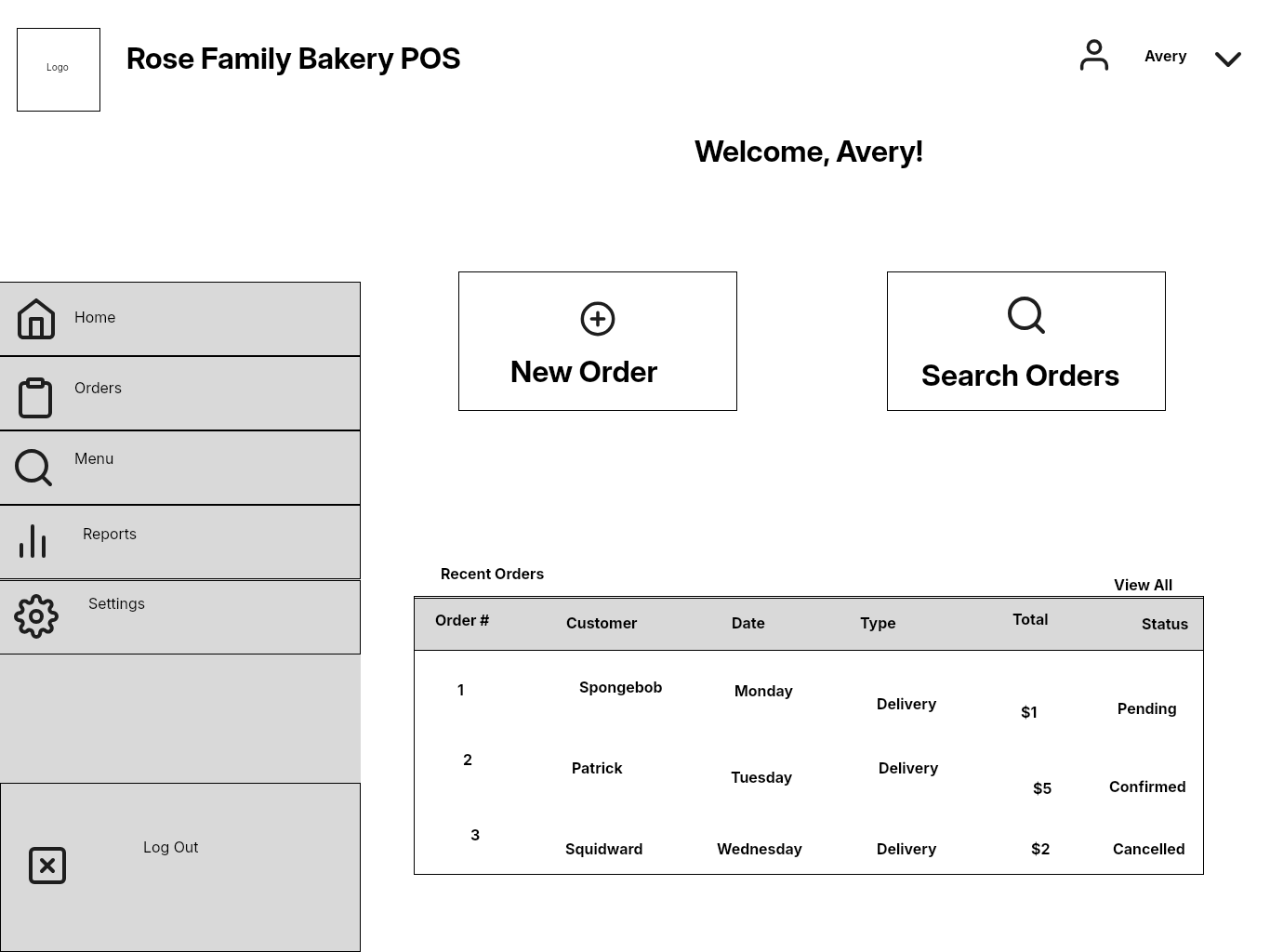
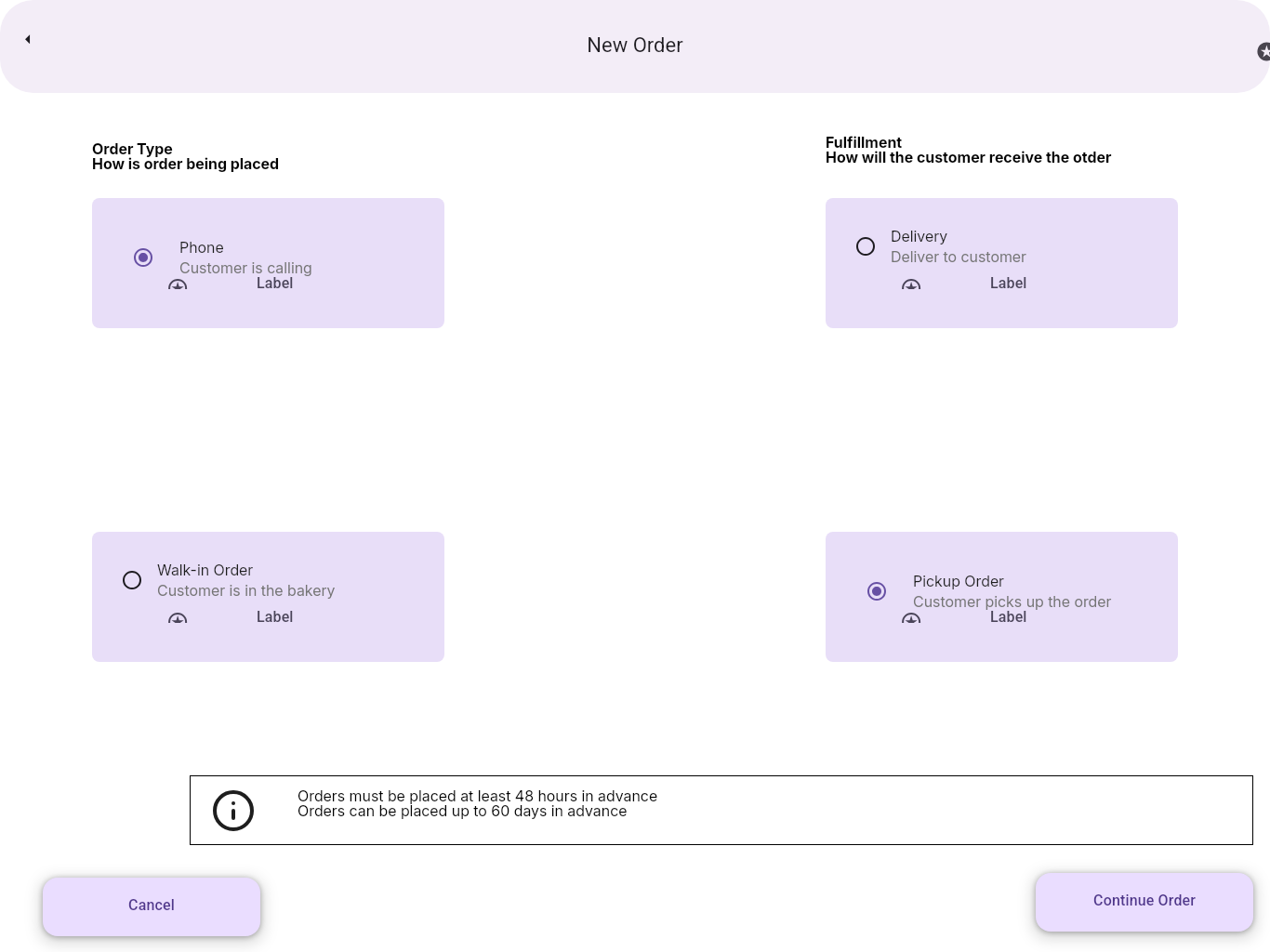
The low-fidelity flow moves through setup, products, review, customer and payment information, and confirmation. Order timing is part of the task: the concept requires at least 48 hours’ notice and allows scheduling up to 60 days ahead. Putting setup before product customization gives those constraints a place in the flow.
02 / DESIGN DECISIONS
Keep the current order beside the choices
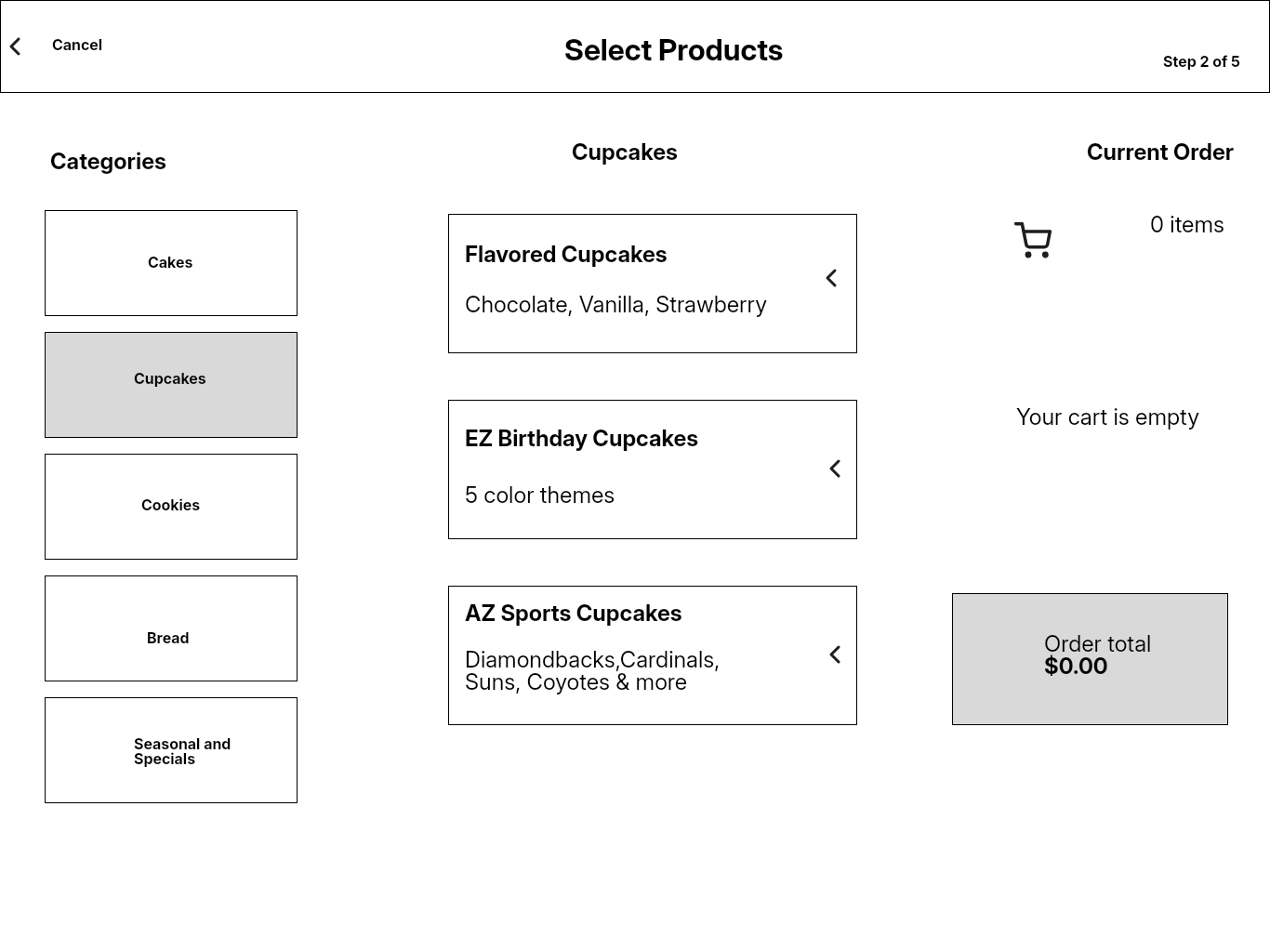
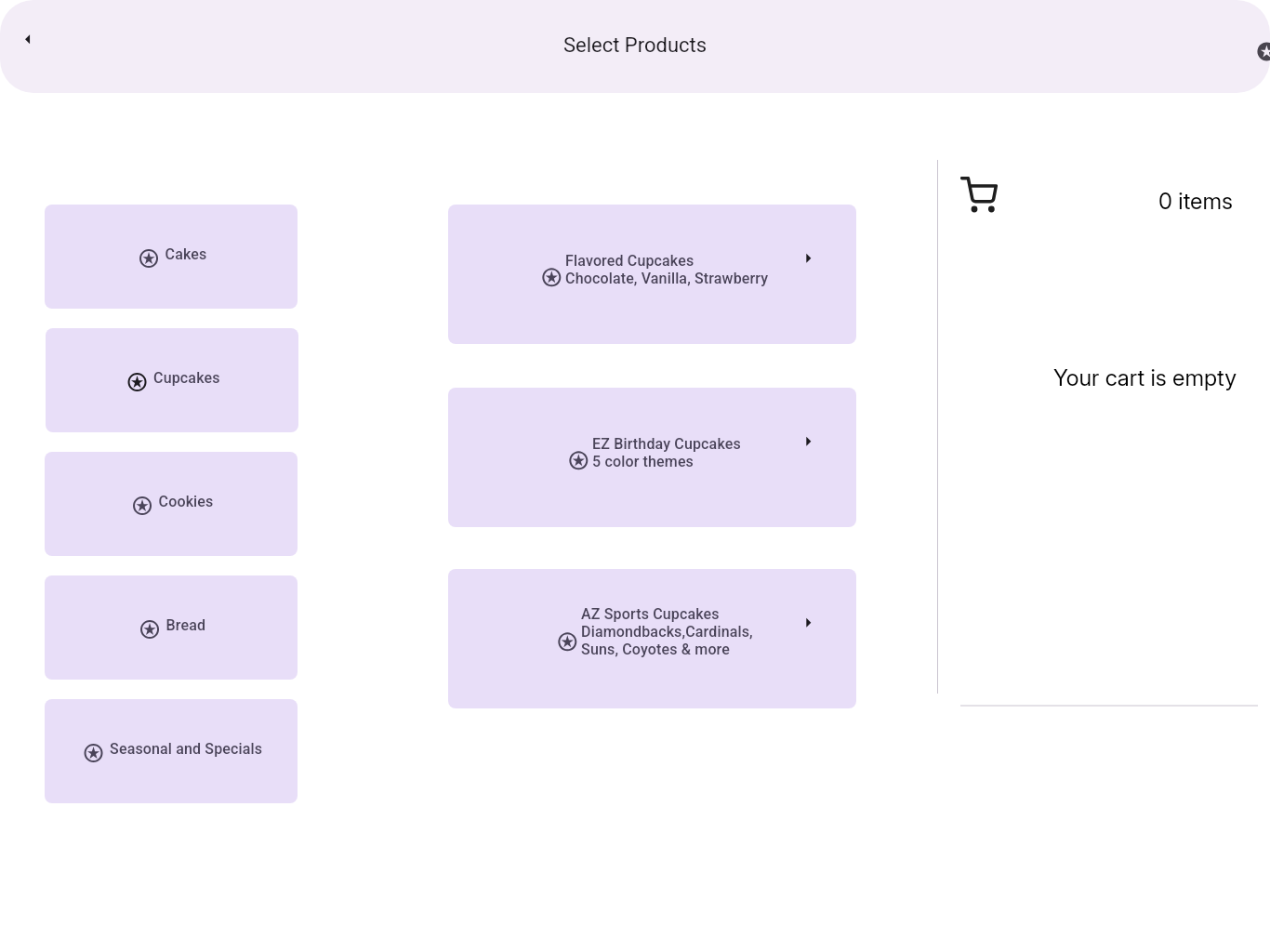
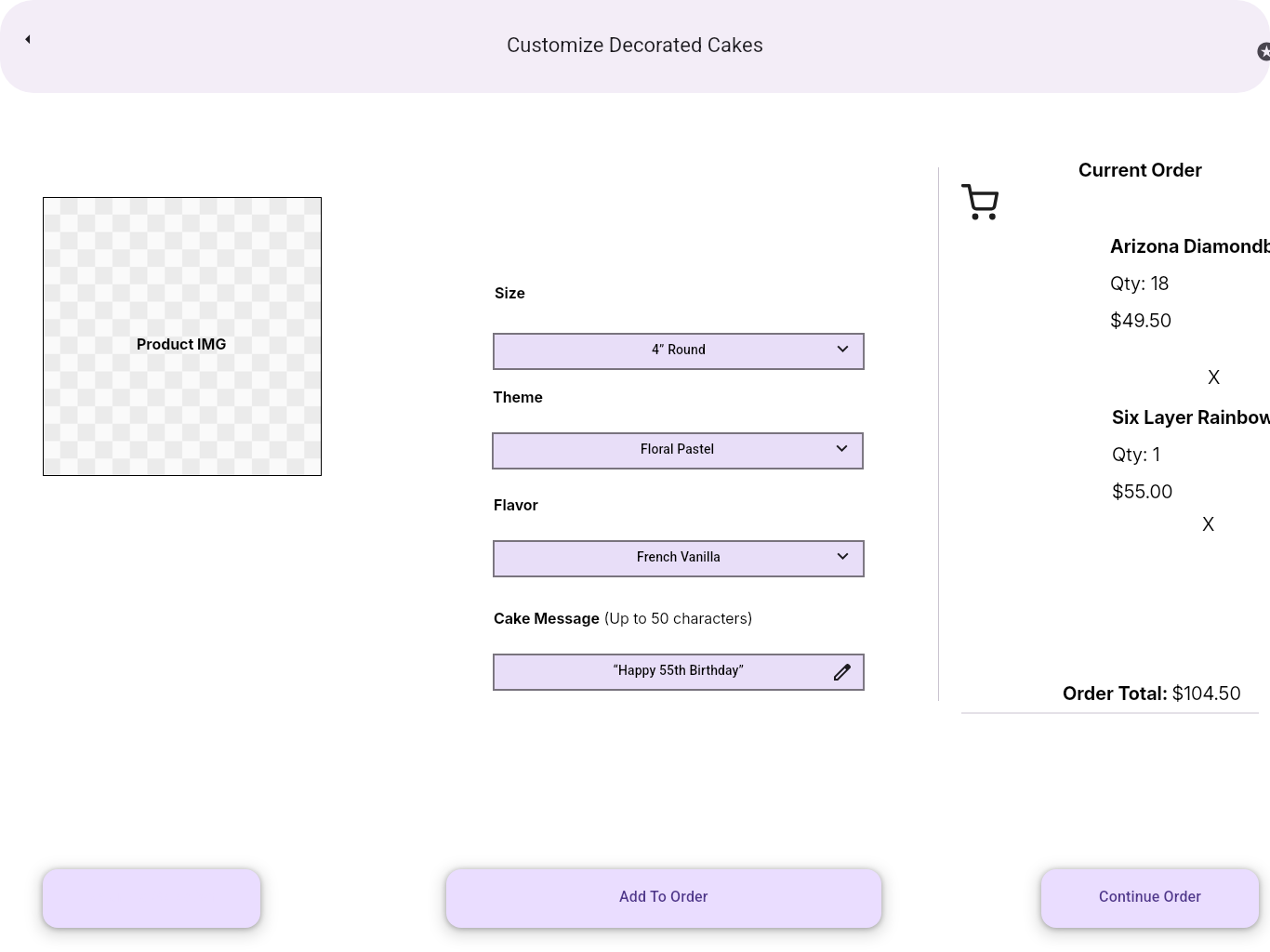
The mid-fidelity screens develop the product categories and cake options: size, flavor, theme, quantity, and a message of up to 50 characters. The current order remains alongside these controls. That layout is intended to let staff check what’s already included without leaving the customization step.
03 / DESIGN DECISIONS
Make corrections possible before payment
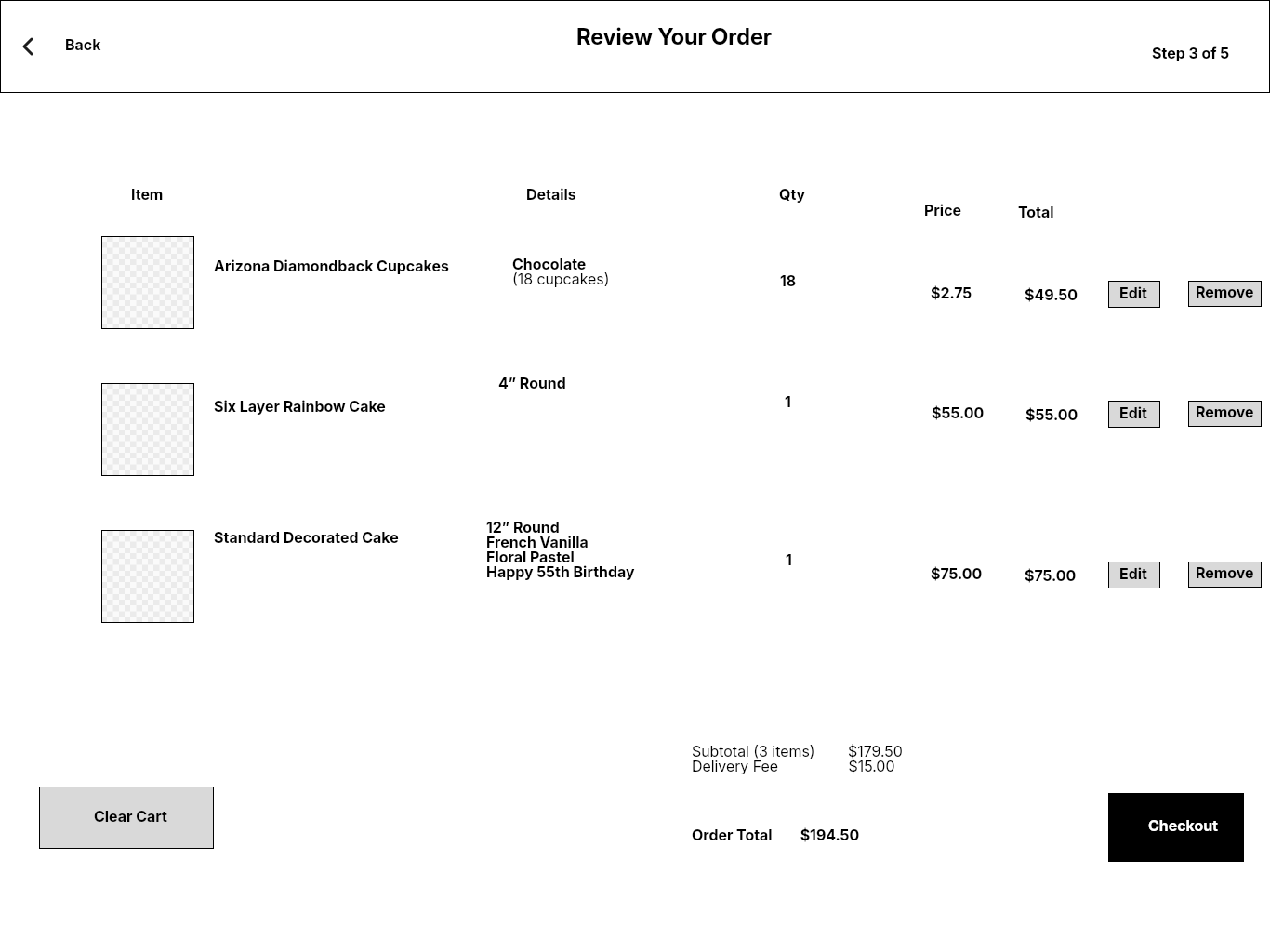
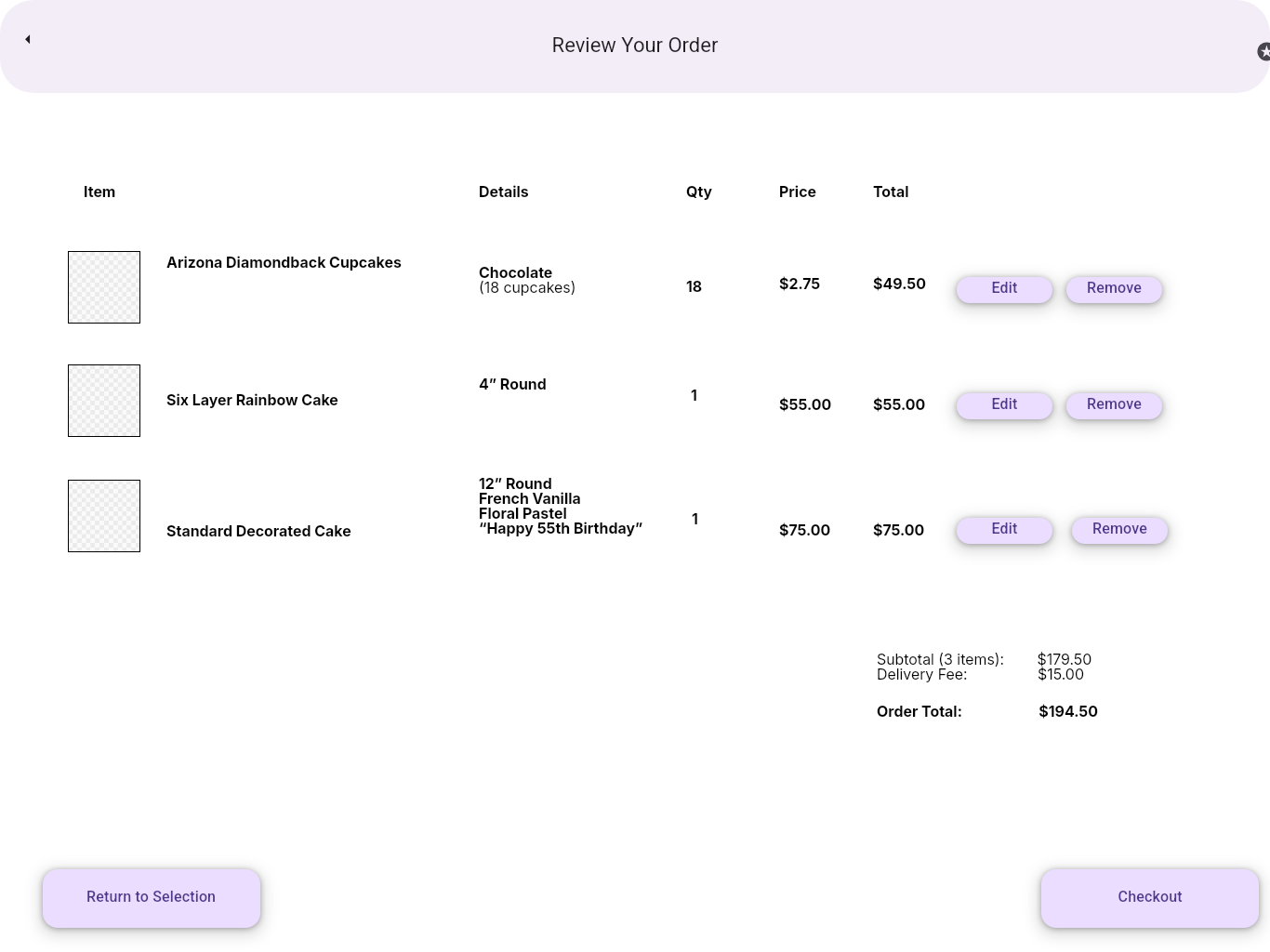
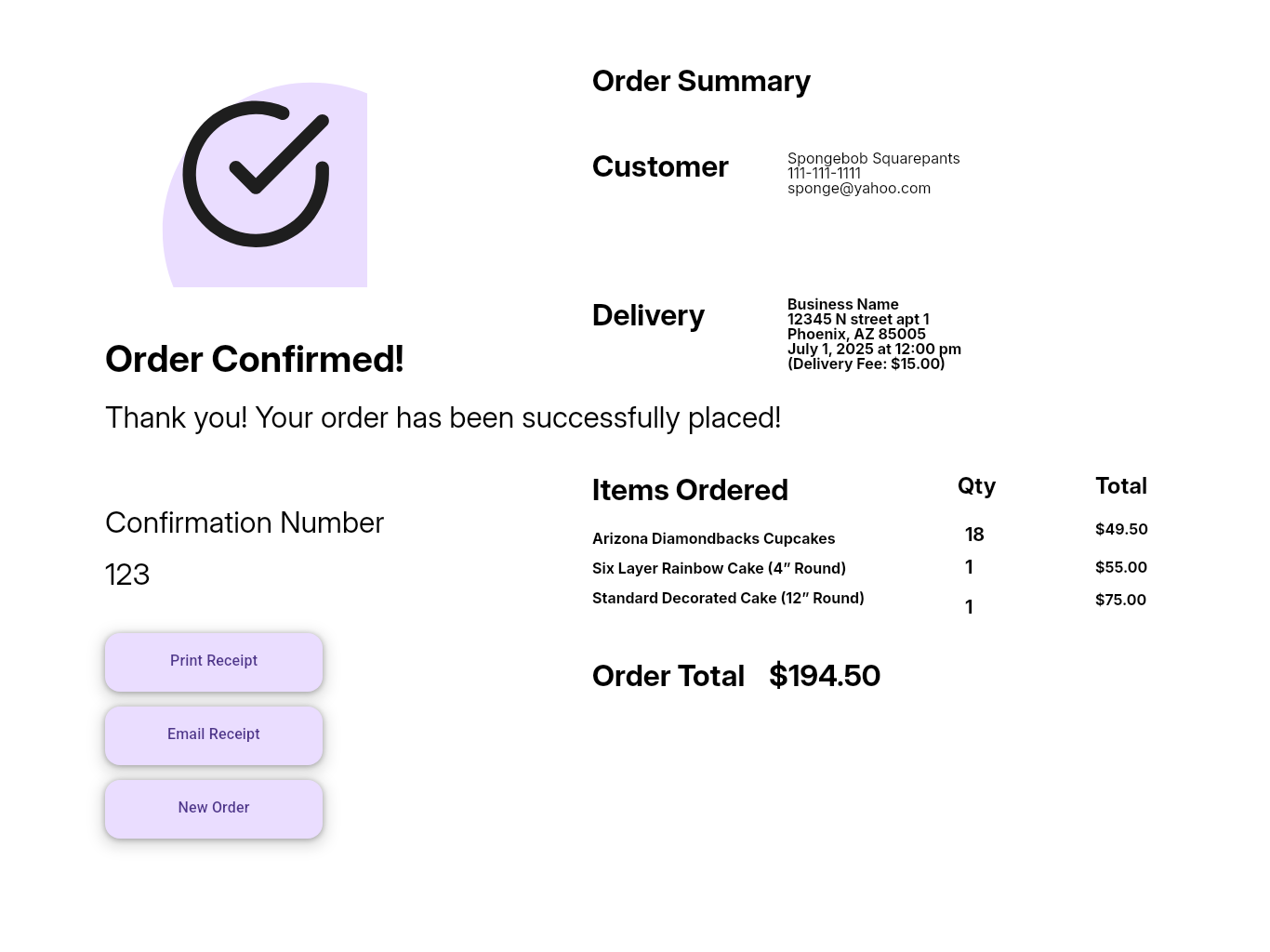
The review step brings items, edit and remove actions, subtotal, delivery, and total together. It provides a deliberate pause before payment, when a staff member can check the order with the customer. The low- and mid-fidelity screens below show how that hierarchy developed, followed by the confirmation state.
REFLECTION
What I’d take forward
This work turns a detailed ordering task into a sequence of decisions with a visible running summary. The next step would be to test it with bakery staff: can they change a cake option, explain the total, and catch an incorrect date before payment? That would help determine whether the staged flow suits a real counter conversation.
Individual academic concept · Low- and mid-fidelity Figma wireframes. Product-image placeholders are intentional at this stage.
Let’s talk about this project ↗